

Search the Journey to Forever website – click HERE
|
Journey to Forever: Make a donation |

Navigation
| Small farms library | |
| City farms | |
| Organic gardening | |
| Composting | |
| Small farms | |
| Introduction Sustainable farming Small farms fit References |
|
| Small farm resources | |
| Back to the land | |
| Small farms | |
| Organics | |
| Soil management | |
| Sustainable farming | |
| General resources | |
| Food storage and preservation | |
| Useful databases | |
| Community-supported farms | |
| Farming with trees | |
| Agroforestry Bamboo Resources |
|
| Farming with animals | |
| Introduction Livestock resources Cattle Sheep General Draft animals |
|
| Pasture | |
| Introduction Pasture resources Silage |
|
| Pigs for small farms | |
| Why pigs have snouts Raising pigs on soil in Japan Lady Eve's pigs Pigs on pasture Pig resources |
|
| Poultry for small farms | |
| Muscovy ducks Khaki Campbell ducks Chickens Geese Rabbits Guineafowl General tips High-protein poultry feed from thin air Poultry as unpaid labour They're not pets Doing it |
|
| Poultry resources | |
| Aquaculture for small farms | |
| Introduction Aquaculture resources |
|
| Composting for small farms | |
| Foundation On-farm composting resources |
|
| Controlling weeds and pests | |
| Weeds Weed control resources Insect pests No pesticides Insect control resources |
|
Contact usTo Keith Addison Handmade Projects |
Small farm resources
General
Food storage and preservation
Useful databases
General
 Agrodok -- Popular series of 44 books on small-scale sustainable agriculture, published by the Agromisa Knowledge Centre for Small Scale Sustainable Agriculture, based in Wageningen in the Netherlands. The Agrodok books focus on the tropics, but the information is relevant anywhere. Clear and concise but thorough illustrated guides, savvy, written from experience, well presented. Titles cover compost, soil fertility, green manuring, erosion control, water harvesting, soil moisture, fruit growing, the vegetable garden, urban agriculture, agroforestry, seed production, mushrooms, greenhouses, granaries, storage, preservation, crop protection, donkeys for traction and tillage, pigs, chickens, goats, dairy cattle, fish, rabbits, ducks, bees and honey, marketing, cooperatives. In English, French, many also in Portuguese and Spanish. The full series of 44 books are available for free download as pdf files, see full list of titles, with download instructions. Agromisa:
http://www.agromisa.org/
ECHO -- Educational Concerns for Hunger Organization -- A non-profit organization dedicated to the fight against world hunger. Focus on subsistence tropical agriculture, but for small farmers everywhere, or anyone with a garden. ECHO Technical Notes cover a broad range of topics, from beehives in the tropics to organic neem pest control. ECHO Development Notes (EDN) focus on tropical agriculture, techniques, plants, resources, to improve food production in the tropics. Also ECHO Appropriate Technology Notes, ECHO Plant Information Sheets, all free online in full text. ECHO's seed bank of tropical food, fuel, and soil-improving plants supplies seed of useful plants in small trial packets for experimentation in the field, seed catalog of unusual garden vegetables for sale (North America). ECHO Canada is a sister organization founded for and by Canadians.
http://www.echotech.org/
VITA -- Volunteers in Technical Assistance: US-based private, nonprofit, international development organization, worked for 42 years helping to empower the poor and fostering self-sufficiency in developing countries. VITA published a wide range of practical guides and how-to's, from a few pages to complete manuals of 200 pages and more, with clear instructions and easy-to-follow plans and illustrations. Useful guides on agriculture and animal husbandry, building and construction, business, industry and crafts, communication and transportation, energy, food processing, health and nutrition, stoves, ovens and kilns, water supply, natural resources, conservation. VITA publications are available in full-text free online at Alex Weir's CD3WD 3rd World Development online library -- see full list of 160 VITA publications, with direct links for online access.
 Better Farming Series, FAO Economic and Social Development Series No. 3, Food and Agriculture Organization of the United Nations, Rome, Institut africain de developpement economique et social (INADES), Abidjan, Ivory Coast, 1976 to 1995 -- Series of 44 manuals covering plants, soil, crops, livestock, poultry, fish farming, water, energy, farm business, and more. Prepared for an African environment but the series can be used anywhere, with adaptations to different climatic and ecological conditions where necessary. The approach of the books is general, in order to create a basic model that can be modified or expanded to fit local conditions. Practical and to-the-point guides, written simply and clearly, illustrated, 30-100 pages. The whole series is available in full-text free online at Alex Weir's CD3WD 3rd World Development online library. See full list of titles with direct links for online access.
CD3WD - CD 3rd World - and TWI - Third World Information -- Hosted by Alex Weir , CD3WD is a free digital collection of practical How-To Technical Development Information -- "helping the 3rd world to help itself". More than 1,700 titles in full text online, in html or pdf format. Covers agriculture, Appropriate Technology, construction, building, civil engineering, electrical trades and electronics, fisheries and fish farming, food processing and storage, post harvest, forestry, health, medicine, metalworking, soil, water, veterinary medicine, animal health, sanitation, woodwork, carpentry, and more. Sourced with permission from US, UK, German, Swiss, UN and other aid programs, NGOs and other bodies worldwide. Full list for online access (note: items marked "offline" are in fact online in pdf format):
http://www.fastonline.org/CD3WD_40/CD3WD/INDEX.HTM
Download the complete collection -- more than 4,000 titles on 44 CDs:
http://www.cd3wd.com/CD3WD/index.htm
ATTRA -- Appropriate Technology Transfer for Rural Areas (US) concentrates on sustainable farming information. Large set of resource links on sustainable farming, from what-is to how-to, US focus. Online publications: Systems Guides, Technical Notes, Resource Lists, Farmer Profiles, Fundamentals of Sustainable Agriculture Series, Agronomy Series, Horticulture Series, Livestock Series, Pest Management Series, Soil and Fertility Series, Marketing & Business Series, Value-Added & Processing Series, Alternative Farming Systems Series, Resource Series, Planting Your Farm's Future Leaflets. Publication List:
http://www.attra.org/publication.html
International Ag-Sieve was published by Rodale's International program from 1988 to 1995. Good resource on sustainable development in the Third World, packed with reports and feedback from the field. Issues covered vermiculture, rice, extension methodologies, animal husbandry, agroforestry, women in agriculture, urban gardens, IPM (integrated pest management), soil amendments, seed saving and biodiversity, ancient farming, training, pastoral, aquaculture, water, bio-control, livestock, post-harvest, composting, legumes/green manures, biocontrol, semi-arid agriculture, cassava/root crops. All 36 issues free online:
http://www.fadr.msu.ru/rodale/agsieve/index.html
Mother Earth News Online (not the same as the original Mother Earth News of the 70s and 80s) -- best stories over 30 years of getting back to the land (online), current issue, bookshelf.
http://www.motherearthnews.com/
All Mother Earth News articles free online from 1970 to 2008, search:
http://www.motherearthnews.com/article-categories.aspx
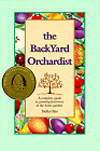 "The Backyard Orchardist: A Complete Guide to Growing Fruit Trees in the Home Garden" by Stella Otto. Revised edition 1995, Otto Graphics, ISBN 0963452037
Step-by-step guidance from a true expert on how to start your orchard -- planning, soil, tree selection for your climate, planting, pruning, pest management, harvesting and storing. Buy at Amazon.com: The Backyard Orchardist
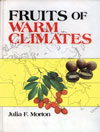 "Fruits of Warm Climates" by Julia F. Morton, ISBN: 0-9610184-1-0
Julia F. Morton is Research Professor of Biology and Director of the Morton Collectanea, University of Miami, a research and information center devoted to economic botany. Covers 124 species, with an extensive bibliography; the entry for each species is a minor essay, with detailed treatment under Description, Origin and Distribution, Varieties, Climate, Soil, Propagation, Culture, Keeping Quality, Pests and Diseases, Food Uses, Other Uses. The approach is global -- Uses, for instance, covers the practices of traditional peoples throughout the world, including medical uses. Ms Morton provides a real wealth of information from her long experience of the subject. With photographs. Full text online:
http://www.hort.purdue.edu/newcrop/morton/index.html
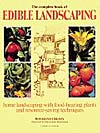 "The Complete Book of Edible Landscaping" by Rosalind Creasy, 1982, Sierra Club, ISBN 0871562782
Thorough treatment, practical, how-to advice from a seasoned landscape designer and consultant, well-illustrated. Energy, water and soil-saving techniques for different regions. Includes a 160-page encyclopaedia of edible plants with cultural details, landscaping, culinary uses, sources and recipes. Large list of plant and seed suppliers. "Head and shoulders above the rest" of the books on this subject, says a master gardener. Buy at Amazon.com: The Complete Book of Edible Landscaping
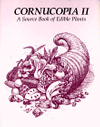 "Cornucopia II -- A Source Book of Edible Plants" by Stephen Facciola, Kampong, ISBN 0962808725
Encyclopaedia of about 3,000 edible plants, alphabetical listing of plant families with 300 pages describing 7,000 varieties, especially traditional and heirloom varieties, and promising new releases. Habitat, origin, cultivation, preparation, uses modern and ancient, and 1,300 sources for seed, plants and rootstock, produce and other foodstuffs. In addition to common and botanical name cross-referencing there is an index of plants listed by use and edible parts. Wonderful work of scholarship. Buy at Amazon.com: Cornucopia II
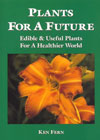 "Plants for a Future: Edible and Useful Plants for a Healthier World" by Ken Fern, 2000, Permanent Publications, ISBN 1856230112
The way we currently produce our food is damaging both to ourselves and our planet. We need to create gardens, woodlands and farms which are in harmony with nature. What we need is to discover and grow a wide variety of easily grown perennial and self-seeding annuals which provide delicious and healthy food, or are useful in other ways. Describing plants such as these, native to Britain and Europe and from temperate areas around the world, this book includes those suitable for: the ornamental garden, the edible lawn, shade, ponds, walls, hedges, agroforestry and conservation. Packed with information, personal anecdote and detailed appendices and indexes, this pioneering book takes gardening, conservation and ecology into a new dimension. "Ken Fern leads us through a garden of improbable delights -- cold climate yams five feet long, edible fuschia fruits, trees laden with delicious berries all through the winter, leaves and flowers with the most subtle and astonishing flavours. It is hard to over-estimate the importance and likely impact of this book. The result of an insatiable curiosity and years of painstaking research, this book is comparable in stature only to the works of Evelyn and Culpeper." -- George Monbiot, The Guardian. Buy at Amazon.com: Plants for a Future
See the Plants For A Future online database
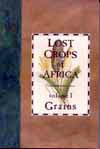 "Lost Crops of Africa: Volume I: Grains" by Noel Vietmeyer, 1996, National Academy Press, ISBN 0309049903
Africa has more native cereals than any other continent. It has its own species of rice, as well as finger millet, fonio, pearl millet, sorghum, tef, guinea millet, and several dozen wild cereals whose grains are eaten from time to time. This is a food heritage that has fed people for generation after generation stretching back to the origins of mankind. It is also a local upon which a sound food future might be built. But this legacy of genetic wealth has largely been bypassed in modern times. The "lost crops" can help provide food security in their native areas, which include many parts of Africa threatened with hunger. At the same time maintaining the diversity of these ancient crops will protect options for the rest of the world to use. Full text online at the National Academy Press:
http://www.nap.edu/openbook.php?isbn=0309049903
Buy the book at Amazon.com: Lost Crops of Africa: Volume I: Grains
Lost Crops of Africa: Volume II: Vegetables, 2006
http://www.nap.edu/catalog.php?record_id=11763
Buy the book at Amazon.com: Lost Crops of Africa: Volume II: Vegetables
Lost Crops of Africa: Volume III: Fruits, 2008
http://www.nap.edu/catalog.php?record_id=11879
Buy the book at Amazon.com: Lost Crops of Africa: Volume III: Fruits
"Lost Crops of the Incas: Little-Known Plants of the Andes with Promise for Worldwide Cultivation" Board on Science and Technology for International Development, National Research Council, 1989, ISBN 0-309-04264-X.
Detailed information on more than 30 different Incan crops that promise to follow the potato's lead and become important contributors to the world's food supply. Some of these overlooked foods offer special advantages for developing nations, such as high nutritional quality and excellent yields. Color photographs of many of the crops plus the authors' experiences in growing, tasting, and preparing them in different ways. Full text online at the National Academic Press:
http://www.nap.edu/catalog/1398.html
Buy the book at Amazon.com: Lost Crops of the Incas
California Rare Fruit Growers (CRFG) is the largest amateur fruit-growing organization in the world. Fruit Facts online -- botanical identification, plant description and culture notes, characteristics of cultivars for 43 fruit varieties -- Common Names, Origin, Species, Related species, Adaptation; Description: Growth Habit, Foliage, Flowers, Fruits; Culture: Location, Soil, Irrigation, Fertilization, Frost Protection, Pruning, Propagation, Pests and Diseases, Fruit Harvest; Cultivars; Further Reading, and a direct link to Index of CRFG Publications, 1969--89. Also The Fruit Gardener magazine, descriptions of 250 rare and unusual edible plants, Seed Bank, the CRFG Fruit List -- Common Name, Genus species, Family, and Fruit Cultural Data, by genus name. Plus a large set of fruit and related links. Exhaustive! Excellent resource.
http://www.crfg.org/
PROSEA stands for Plant Resources of South-East Asia, an international program documenting information on South-East Asian plant resources. It covers agriculture, forestry, horticulture and botany and promotes plant resources for sustainable tropical land-use systems. PROSEA has a Network Office in Indonesia coordinating six Country Offices in South-East Asia, and a Publication Office in Wageningen (the Netherlands). The PROSEA Handbook is in 19 parts, on Pulses, Edible fruits and nuts, Dye and tannin-producing plants, Forages, Timber trees, Rattans, Bamboos, Vegetables, Plants yielding non-seed carbohydrates, Cereals, Auxiliary plants, Medicinal and poisonous plants, Spices, and Essential-oil plants. Each has an accompanying bibliography. The Vegetables volume deals with about 100 important vegetables, cultivated as well as wild species, with descriptions of 125 minor species and a list of 800 species yielding vegetables as a byproduct.
http://www.prosea.nl/
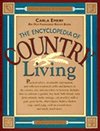 "The Encyclopedia of Country Living -- An Old Fashioned Recipe Book" by Carla Emery, 9th edition 1994, Sasquatch Books, ISBN 0912365951
The homesteaders' bible -- Carla Emery published the first edition herself, more than 25 years ago, and it's since grown into an 800-page illustrated treasure of rural wisdom gleaned over the years from homesteaders and others. It's an all-embracing rural encyclopaedia, the complete resource for self-sufficient living. Grow a garden, milk a cow, catch a pig, pluck a chicken -- everything about food, growing it, storing it and cooking it, including hundreds of recipes, a wealth of practical information, detailed instructions, anecdotes, personal advice, suppliers, catalogs, books and magazines, organizations, how-to, where-to and why-to, and morsels of everything else from the highly personable Ms Emery. Buy at Amazon.com: The Encyclopedia of Country Living
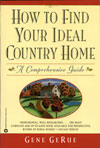 "How to Find Your Ideal Country Home: A Comprehensive Guide", by Gene GeRue, 3rd edition, 1999, Warner Books, ISBN 0446674540
This is what Gene says about his book: "I met too many urban refugees who made a bad move and then had to move two or three times more before they got it right. That hurts, both financially and psychologically, so my purpose is to show you how to get your right place with the first move... There are 32 chapters, each a subject I feel is vital knowledge to help you make your first purchase the right one, so you don't have to uproot yourself and loved ones a second or third time." More about finding out what you want from life and helping you to get it than just getting a good deal on a piece of property. Aimed at the US but good for rural property searches anywhere. Buy at Amazon.com: How to Find Your Ideal Country Home
Gene's website:
http://www.ruralize.com/bookinfo.html
Twenty Essential Steps to Buying Rural Property Right -- "If you cannot afford the book, please read the following", says Gene GeRue, author of "How to Find Your Ideal Country Home":
http://www.ruralize.com/20steps.html
Gene's GeRue's website is a hub for rural living, with the "Ask & Tell Bumpy Gene" email advice column, useful links, the Country Bookstore, and The Complete Guide to Country Living, an "e-book series in progress" -- four books taking shape online. Book One: Designing and building the homestead; Book Two: Plants; Book Three: Animals; Book Four: Community. Gene welcomes contributions.
http://www.ruralize.com/CompleteGuide.html
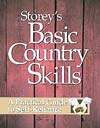 "Basic Country Skills: A Practical Guide to Self-Reliance" by Deborah Burns (Editor), 1999, Storey Books, ISBN 1580172024
"What Country Folk Know that You Don't." Like how to plant a cold and flu garden to make your winter healthier and happier. A manual for everyday survival, whether in town or country, especially on gardening -- more than a third of the 544 pages are devoted to gardening. More than 150 of Storey's expert authors in gardening, building, animal raising, and homesteading share their specialized knowledge and experience. Illustrated step-by-step instructions on how to milk a cow, tap a maple tree, clean a fish, lead a horse, build the best chicken coop -- how to be skilful! Full resource list and a complete index. Buy at Amazon.com: Basic Country Skills
 On-line version of the Old Farmer's Almanac that has provided wit, wisdom, weather and much besides since 1792. Cooking, gardening, great editorial and features, Editors' Picks, Picks for Kids, tips & tricks on everything: How to Predict the Weather Using a Pig Spleen, The Truth About Woolly Bears, Three Ways to Hypnotize a Chicken. And so on. Yankee Publishing Inc:
http://www.almanac.com/
 Lehman's Non-electric -- "Serving the Amish and others without electricity with products for simple, self-sufficient living since 1955." Everything you need to go back to the land, from the people who never left it in the first place. Stuff here from all over the world -- German pressure lanterns, Chinese anvils, South African 3-legged cast-iron cooking pots, scythes from Austria, high-quality, along with built-to-last-forever goods made by local Amish craftsmen, lots of basic, sensible items you just don't find anywhere these days: "Products for Simple, Self-sufficient Living". Goods for the kitchen, appliances, stoves, water, lamps & lights, tools & farm, outdoors, home, plus online bookstore with books on cookery and preservation, health and nutrition, make it yourself, farming, animals, home and garden, country living, Amish and Mennonite. Order online. Site search.
http://www.lehmans.com/
Lehman's Country Life blog -- "The new and improved online simplicity village", user-powered community blog.
http://countrylife.lehmans.com/
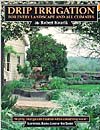 "Drip Irrigation for Every Landscape and All Climates: Helping Your Garden Flourish, While Conserving Water!" by Robert Kourik, Heidi Schmidt (illustrator), 1993, Metamorphic, ISBN 0961584823
How to plan and set up a drip system. Kourik has been installing drip systems and advising people about them for many years. His familiarity with the intricacies of these tricky arrangements lets him cut through the jargon and mystery. Clearly illustrated, the definitive work on drip irrigation. Buy at Amazon.com: Drip Irrigation for Every Landscape and All Climates
The Drip Store -- Online Source for Drip Irrigation, worldwide shipping: catalog, advice by email, bookstore, and online web forum on drip irrigation (lots of information in the message archive):
http://www.dripirrigation.com/
Microirrigation Forum -- Microirrigation is the universal term for drip, trickle or microspray irrigation systems. It is a growing technology which has the potential to maximize crop productivity, conserve soil, water and fertilizer resources while protecting the environment. The purpose of this forum is to provide an online niche which focuses on the technical and management aspects of microirrigation systems. The Microirrigation Forum also serves as the home page for Trickle-L, an e-mail discussion list regarding this technology.
http://forums.dripirrigation.com/
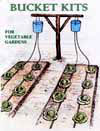 Bucket Drip Irrigation Kit -- Chapin Watermatics. The bucket drip irrigation kit is an excellent tool for growing a vegetable garden with minimal amounts of water and labor. With the kit comes 100 feet of drip tape, a filter plug and all the fittings and hoses to connect the tape to the bucket. Bucket not included. (Picture shows two bucket kits.)
http://www.chapindrip.com/products/
DIY%20KITS.php
"Bucket Kit Watering vs Hand Watering" -- Chapin Third World Projects, Chapin Watermatics. Bucket Kits are now being used in many countries to help the poorest of the poor to grow vegetables when they have no rain.The recommendation is to use 10 gallons of water daily for two 50-foot rows of vegetables. The water often has to be carried for a mile or two. This is a report on trials to determine if 10 gallons is enough water to grow a good crop. An identical hand watered bed of vegetables was grown next to the Bucket Kit bed. The same amount of water was applied twice daily to both beds. Both beds produced a good crop, but the total crop in the Bucket Kit bed had a 24.3% yield increase over the total crop in the hand watered bed.
http://www.hydrosource.com/web_clp/971101/chap2.htm
The Chapin Bucket Irrigation Kit -- illustrated how-to:
http://www.hydrosource.com/w3clp008.htm
Food storage and preservation
 "Making the Best of Basics -- Family Preparedness Handbook" by James Talmage Stevens, 12th edition, 2010, Fulfillment Central Publishing, ISBN-10: 1934275182, ISBN-13: 978-1934275184
The preparedness bible -- how to live on your own resources for up to a year, regardless. First published in 1974, this is still the most comprehensive book on the subject. 760,000 copies sold. This new edition has been updated with 250 new pages of charts, tables and information. The focus is on food: "Store what you eat, eat what you store, use it or lose it." Thorough. Available in both a printed version and as a digital download e-book. Comes with a free 90-minute online video. Anybody who's interested in food will benefit from this book. Buy the book: Making the Best of Basics
 "How to Develop a Low-Cost Family Food-Storage System" by Anita Evangelista, 1995, LoomPanics Unlimited, ISBN 0966693205
Determine your storage needs, find sources of low-cost bulk foods, choose suitable preservation methods. For better self-sufficiency and just-in-case, and cut your food bills by half while you're at it. Buy at Amazon.com: How to Develop a Low-Cost Family Food-Storage System
 "Keeping the Harvest" by Nancy Chioffi & Gretchen Mead, 1991, Storey Books, ISBN 0882666509
Canning, freezing, drying, preserving and storing -- simple home-preserving techniques to stretch out the fruit and vegetable harvest throughout the year. A reference for thousands of gardeners and cooks since 1976, now updated with new techniques, equipment, and USDA guidelines for home preserving. Fruits and vegetables listed alphabetically with recommendations for preserving them, with reference charts, recipes, troubleshooting tips. Buy at Amazon.com: Keeping the Harvest
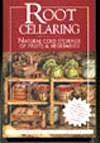 "Root Cellaring: Natural Cold Storage of Fruits and Vegetables" by Mike and Nancy Bubel, 2nd edition, 1991, Storey Books, ISBN 0882667033
A complete guide to building and using root cellars, indoors and out, big or small, plain or fancy. Root cellaring is a simple, energy-saving way to keep food fresh all year. Explains building and using different types of root cellars and which vegetables and fruits store best. Cheap, effective, low-tech ways to store the harvest, storage requirements for nearly 100 home garden crops, dozens of delicious recipes. Variety of root cellar plans with illustrations and drawings for nearly any situation. Buy at Amazon.com: Root Cellaring
"Stocking Up: How to Preserve the Foods You Grow Naturally", edited by Carol Hupping Stoner, Rodale Press, 1977, ISBN 0-87857- 167- 1, 550 p. Download free from the CD3WD online library (48.7 Mb pdf):
http://www.fastonline.org/CD3WD_40/JF/418/07-292.pdf
"How To Preserve Produce Without Refrigeration" by Frank Garrett, Mother Earth News, Issue # 10 - July 1971 -- 7,300-word article, illustrated:
http://www.motherearthnews.com/Real-Food/
1971-07-01/How-To-Preserve-Produce.aspx
Agriculture databases and search engines
 The New Crop Resource Online Program at Purdue University, includes CropSEARCH -- a keyword search engine to access crop information, CropINDEX -- a list of scientific and common names of crops for information access, CropREFERENCE -- books and manuals on crops, Aromatic-MedicinalPLANTS -- a guide to aromatic & medicinal plants, culinary herbs & spices, NewCrop LISTSERV -- an interactive bulletin board for queries, discussion, and information on crops, and much more. Easy access to a huge set of resources on crops new and old, trees, plants of all kinds. "The most comprehensive library and compilation of new and alternative crop information available on the web." Very useful indeed.
http://www.hort.purdue.edu/newcrop/
"New Crops: Solutions for Global Problems" -- excellent article by Noel Vietmeyer of the New Crops project. "Consider the following. In Africa, where the hunger problem is concentrated, there are actually 2,000 species of native food plants. Both there and in the rest of the tropics, the region where malnutrition is severest, can be found 3,000 different fruits as well as over 1,000 vegetables. In the lands where deforestation is so destructive are to be found over 20,000 trees, some of them extremely fast growing. In the desertifying regions can be found many useful drought-tolerant plants -- I don't know how many, but it runs into the hundreds. Despite the existence of all this herbaceous heritage, hardly any tropical plant is being employed to full advantage to relieve the pervasive problems. Of Africa's 2,000 food plants, only sorghum gets major research. Of the 3,000 fruits, only banana and pineapple get solid global support, and again much of the effort is aimed at helping the rich rather than the needy. Of the 20,000 tropical trees, only a handful are undergoing global advancement. That the bulk of useful tropical biodiversity is underexploited is one of the glaring oversights of this era. The creation of more crops and the support for new-croppers is of global importance." Read on!
http://newcrop.hort.purdue.edu/newcrop/proceedings1996/V3-002.html
Plants For A Future -- Database Search has a wide variety of powerful searches of very large plant resources. Search by Name (common or family), Edible, Medicinal or Other Use, Native Area, Habitat, word search, Latin names. You can download the database for your own use.
http://www.ibiblio.org/pfaf/D_search.html
AgNIC (Agriculture Network Information Center) is a distributed network that provides access to agriculture-related information, subject area experts, and other resources. It was established by an alliance of the National Agricultural Library, land-grant universities, and other organizations committed to facilitating public access to agricultural and related information. AgDB is a database directory of quality agriculture-related databases, datasets, and information systems. It describes and links to more than 1,100 information resources, ranging from "technical" to "practical".
http://www.agnic.org/
Dr. James Duke's Phytochemical and Ethnobotanical Databases -- search for Chemicals and activities in a particular plant, High concentration chemicals, Chemicals with one activity, Ethnobotanical uses. Many different search options and different resources to search. Hosted by the USDA's Agricultural Research Service (ARS).
http://www.ars-grin.gov/duke/
Poisonous Plants at Cornell University's Animal Science Department includes plant images and information on botany, chemistry, toxicology, diagnosis and prevention, linked to related resources. Database search.
http://www.ansci.cornell.edu/plants/
See also Appropriate technology agriculture resources
Small farm resources
Back to the land -- a 140-year trend
Small farms
Organics, Sustainable farming
General
Food storage and preservation
Useful databases
Small farms
Small farm resources
Community-supported farms
Farming with trees
Farming with animals
Pasture
Pigs for small farms
Poultry for small farms
Aquaculture for small farms
Composting for small farms
Controlling weeds and pests
Small farms library
City farms
Organic gardening
Building a square foot garden
Plant spacing guides
No ground? Use containers
When to sow what
Seeds
Garden pond
Gardening resources
Composting
Making compost
Composting resources
Composting indoors
Vermicomposting
Humanure
Composting for small farms
