

Search the Journey to Forever website – click HERE
|
Journey to Forever: Make a donation |

Navigation
| Small farms library | |
| City farms | |
| Organic gardening | |
| Composting | |
| Small farms | |
| Introduction Sustainable farming Small farms fit References |
|
| Small farm resources | |
| Back to the land | |
| Small farms | |
| Organics | |
| Soil management | |
| Sustainable farming | |
| General resources | |
| Food storage and preservation | |
| Useful databases | |
| Community-supported farms | |
| Farming with trees | |
| Agroforestry Bamboo Resources |
|
| Farming with animals | |
| Introduction Livestock resources Cattle Sheep General Draft animals |
|
| Pasture | |
| Introduction Pasture resources Silage |
|
| Pigs for small farms | |
| Why pigs have snouts Raising pigs on soil in Japan Lady Eve's pigs Pigs on pasture Pig resources |
|
| Poultry for small farms | |
| Muscovy ducks Khaki Campbell ducks Chickens Geese Rabbits Guineafowl General tips High-protein poultry feed from thin air Poultry as unpaid labour They're not pets Doing it |
|
| Poultry resources | |
| Aquaculture for small farms | |
| Introduction Aquaculture resources |
|
| Composting for small farms | |
| Foundation On-farm composting resources |
|
| Controlling weeds and pests | |
| Weeds Weed control resources Insect pests No pesticides Insect control resources |
|
Contact usTo Keith Addison Handmade Projects |
Farming with animals
Introduction
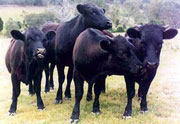
Dexter cattle -- see below
Livestock resources
Cattle
Dexter cattle
Sheep
General
Draft animals
Mixed farming is best. Nature never tries to raise crops without animals, and the more species in attendance the better. This doesn't mean extra management problems, it means increased biodiversity -- which works in your favour in many ways, meaning fewer management problems. Fewer pests, less disease, higher yields, fertile soil, a healthy farm, and all your eggs in many different baskets.
Chickens are not just egg machines, they can do much more for you than that, if you let them, and reward you with better and cheaper eggs, more chickens, less work and a healthier farm.
Pigs are more than meat factories -- if you understand the nature and function of a pig's snout, you won't keep pigs inside on nice clean cement and face high feed bills, higher vet bills, and even higher mortality rates.
When you apply a variety of livestock to the land according to their nature, along with the crops according to their nature, in an integrated pattern according to Nature's nature, then all is well.
Even in a backyard with no fields, no forage, no pasture, and no orchard, the same rules apply -- it's always possible to follow Nature's rules.
You really have no room for livestock? Not even a rabbit? Well, there's always you, and the way you apply yourself to the land. (See, for instance, Humanure.)
See also:
Pasture
Pigs for small farms
Poultry for small farms
Livestock resources
Cattle
 The Family Cow by Dirk Van Loon, 1983, Storey Books, ISBN 0882660667
The complete reference for the family that decides to keep a cow. Selection, handling, grooming, housing, fencing, grazing, feeding, milking, breeding, calving, calf health and more. Well illustrated and based on direct experience. Basic, yet dealt with in depth, and entertaining. What about slaughtering? Well, decide for yourself. Buy at Amazon.com: The Family Cow
 Raising a Calf for Beef by Phyllis Hobson, 0-88266-095-0, 128 pages -- A freezer full of fine beef at half the market price (and much less than that if you raise the hay and grain too) -- just one of the many rewards of raising your own beef calf. It takes about 10 minutes morning and evening (every day) and 20 minutes of the weekend for stall cleaning. Assesses the pros and cons of raising a beef calf, covers housing and pasture, feeds, caring for the newborn calf (what to do everyday), weaning, fattening, butchering. Fully illustrated. Buy at Amazon.com: Raising a Calf for Beef
 Storey's Guide to Raising Beef Cattle by Heather Smit Thomas, Storey Books, 1998, ISBN 1580173276 -- Definitive handbook both for beginners and experienced owners -- what you need to know to know to raise one, two, or even a herd of beef cattle. Learn how to prepare comfortable, low-maintenance facilities, to breed and calve cattle, pasture, fencing, feeding, keeping cattle healthy, to understand cattle behavior and handle herds humanely and effectively. Comprehensive, clearly written by one who's "seen it all". Buy at Amazon.com: Storey's Guide to Raising Beef Cattle
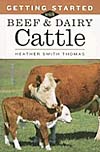 Getting Started with Beef & Dairy Cattle by Heather Smith Thomas, 2005, Storey Publishing, ISBN-10: 1580175961 -- Storey's handbook for small farmers and beginners on organically grown meat and dairy products. A succinct layperson's guide to the basics of raising a small herd of cattle, whether for meat or dairy products. Outlines organic and natural farming methods, feeding, shelter, and care, breeding and calving, managing a herd throughout the seasons, health care and preventing disease. For beef cattle, there are guidelines for butchering; for dairy, step-by-step guidelines on milking. Informative and useful, engagingly written, clearly presented and well-illustrated guide. 288 pages. Buy at Amazon.com: Getting Started with Beef & Dairy Cattle
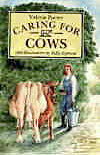 Caring for Cows by Valerie Porter, 1996, Whittet Books, UK, ISBN-10: 0905483944, 144 pages -- Written for the house cow owner, emphasis on the welfare of the cow and on organic principles. Practical information on feeding, housing, breeding and milking, covers the production of dairy produce. Illustrated with drawings by Sally Seymour. Buy at Amazon.com: Caring for Cows
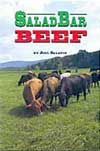 Salad Bar Beef by Joel Salatin, 1995
"Salad bar beef receives no grain -- ever. God made multi-stomached animals to eat forages." Quite right too. No more feed lots! This how-to book explains the why, how, and who of small-scale, organic livestock management. Buy at Amazon.com: Salad Bar Beef
Understanding Dairy Production in Developing Countries by John W. Hibbs, W. G. Whittlestone, VITA (Volunteers in Technical Assistance) -- Discusses efforts to improve primitive dairy production practices to provide more and better quality milk as a source of highly nutritious food for humans, especially growing children. Full text free online at CD3WD 3rd World Development online library:
http://www.cd3wd.com/cd3wd_40/vita/dairyprd/en/dairyprd.htm
Dairy cattle husbandry, Agrodok, AD-14, ISBN 90-77073-66-3 -- Aimed at smallholders with livestock experience who want to start keeping cattle or improve their operation. Cattle farming systems, breeding, calf rearing, nutrition, health, administration. English, French -- Download here
 Cattle Breeding, Better Farming Series 11 (FAO) -- Breeding, feeding, health, reproduction. Full text free online at CD3WD 3rd World Development online library:
http://www.cd3wd.com/cd3wd_40/lstock/001/
cattlgen/bf_cat_breeding/index.htm
Preparation of dairy products, Agrodok AD-36, ISBN 90-8573-062-7 -- A manual for small-scale production of dairy products in developing countries using simple techniques. Why-to's and how-to's on hygiene, processing techniques, starter cultures, recipes, cheese. English, French, Portuguese -- Download hereDexter cattle
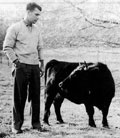 There's a worldwide surge of interest in Dexters. These tiny cattle stand not much more than 3ft at the shoulder and look like toys, but in fact they're tough and hardy, and very useful -- they're just about perfect for smallholders. They need less pasture and feed, but they produce more milk for their weight than any other breed, with average yield of about 1.5-2.5 gallons a day and up to a quart of cream per gallon. They're dual-purpose cattle,
 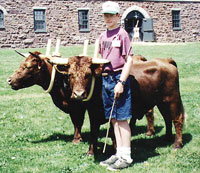 raised for both milk and meat: high-quality choice-grade lean meat with little waste. The cows are highly fertile and drop their calves in the field without difficulty. They thrive in hot as well as cold climates and do well outdoors year round. And they're gentle-natured beasts and easy to handle. Originally bred by smallholders in southern Ireland and left to roam in the mountains almost wild. American Dexter Cattle Association:
http://www.dextercattle.org/
Purebred Dexter Cattle Association of North America -- Links, supply, articles, FAQ.
http://www.purebreddextercattle.org/
Dexter Cattle Society UK -- Breed information, FAQs: Why Dexters? - Where does the Dexter come from? - What does the breed look like? - Are they good mothers? - What about carcass quality? - How good is their milk yield? - Can Dexters crossbreed? - The success of the Dexter breed. http://www.dextercattle.co.uk/
Dex-Info -- Information on Dexter cattle, gateway to Internet resources. "The breed's main attributes: small, hardy, efficient, versatile, intelligent, full of personality."
http://www.dex-info.net/Sheep
 Storey's Guide to Raising Sheep (originally Raising Sheep the Modern Way) by Paula Simmons, Carol Ekarius, 1989, Storey Books, ISBN 0882665294
The small-scale sheep raiser's bible, extensively revised and updated with more than 100 new pages added. A book that spends more time in the barn than on the bookshelf. Comprehensive, care and feeding, lambing, shearing, orphans, making a profit. Buy at Amazon.com: Storey's Guide to Raising Sheep
 Beginning Shepherd's Manual by Barbara Smith, 2nd edition 1997, Iowa State University Press, ISBN 081382799X
Clear and practical introduction to shepherding, small or large flocks. Updated with new chapters by two new contributors: "On Location" features people who are active shepherds. Buy at Amazon.com: Beginning Shepherd's Manual
 Sheep Raiser's Manual by William Kruesi, 1985, Williamson, ISBN 0913589101
Sheep are useful for family farms. They help convert crop residues into a profit, or they follow cattle in a grazing scheme to production, or they graze steep pastureland. This book fills the gap between good beginners' books and manuals for commercial producers. Aims to help you turn a profit. Good on management, good section on breed selection, useful reference. Clear and concise diagrams. Buy at Amazon.com: Sheep Raiser's Manual
Sheep are important in tropical countries -- in fact there are more sheep in developing countries than in the developed world. Ordinary woolly sheep can thrive in warm climates, but hair sheep are better adapted to the tropics -- no wool, but plenty of meat. Sheep can thrive in dry and infertile areas where other livestock and crops would die. In arid regions they are a lifeline. Tropical smallholders are increasingly using sheep to control weeds in orchards, and in rubber tree and coconut plantations, saving money and increasing production, while the sheep manure helps to fertilise the trees.
 Sheep and Goat Breeding, Better Farming Series 12 (FAO) -- Traditional sheep and goat breeding, breeds, feeding, water, care and housing, paddocks, parasites and diseases, reproduction, pregnancy and birth, rearing, castrating, knowing and maintaining the flock, sales. Full text free online at CD3WD 3rd World Development online library:
http://www.cd3wd.com/cd3wd_40/lstock/001/
goats/sh-goatbreedingfao/fb12se/index.htm
Understanding Sheep Production by Claudia S. Ingham, Volunteers in Technical Assistance (VITA), 1990 -- Usual thorough overview from VITA, main focus on small-scale production in the Third World. Breeds of sheep, resources required and scale of operation, practical advice. 13pp. Full text free online at CD3WD 3rd World Development online library:
http://www.cd3wd.com/cd3wd_40/vita/sheep/en/sheep.htm
sheep! magazine -- "The publication for practical sheep farmers..." Subscriptions, Current Events, Profitable Sheep Tips, Current Issue, extensive sheep links and resources
http://www.sheepmagazine.com/
Dairysheep email mailing list, for those interested in dairy sheep and sheep dairying.
Subscribe: dairysheep-subscribe@yahoogroups.com
Unsubscribe: dairysheep-unsubscribe@yahoogroups.com
Post message: dairysheep@yahoogroups.com
List url and message archives search:
http://groups.yahoo.com/group/dairysheepGeneral
 Small-Scale Livestock Farming: A Grass-Based Approach for Health, Sustainability, and Profit by Carol Ekarius, 1999, Storey Books, ISBN 1580171621
Natural, organic approach to livestock management that produces healthier animals, reduces feed and health-care costs, and increases profits. Basics of animal housing, fencing, health, reproduction, and feeding. In four sections: overview, animal husbandry, marketing (conventional and alternative), planning. With interviews and information from other farmers and ranchers all over the US. Buy at Amazon.com: Small-Scale Livestock Farming
 Husbandry: The Surest, Cheapest Way to Leisure, Plenty, Prosperity & Contentment in the Country by Nathan Griffith, 0-96651-030-5, 276 pages -- Learn how to find and buy good low-cost land, dig a well, put up a fence, keep and shear sheep, raise pigs, keep and milk a cow, train a horse or ox, save seeds, breed your own plant varieties, preserve fruits and vegetables, butcher your own meat, cure ham and bacon, make sausage, bread, cheese, butter, yogurt and ice cream; repair buildings; get rid of vermin; deal with human and animal wastes ecologically; and find contentment. Buy at Countryside & Small Stock Journal:
http://www.countrysidemag.com/store/books/0-96651-030-5.html
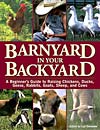 Barnyard in Your Backyard: A Beginner's Guide to Raising Chickens, Ducks, Geese, Rabbits, Goats, Sheep, and Cattle by Gail Damerow, Storey Books, 2002, ISBN 1580174566
Tried-and-true advice for new farmers on raising healthy, happy, productive farm animals: chickens, geese, ducks, rabbits, goats, sheep, and dairy cows. Each chapter focuses on a different animal, pros and cons, housing, land requirements, feeding, health, routine care. Profiles easy to raise, hardy, and companionable species. Simple, clear instructions for caring for animals throughout the year and on processing barnyard products. Detailed black-and-white illustrations, 480 pages. Buy at Amazon.com: Barnyard in Your Backyard
 Microlivestock: Little-Known Small Animals with a Promising Economic Future, 1991, Board on Science and Technology
Small animals require less feed and space and are easier to care for. This fascinating report makes suggestions for replacements for conventional livestock. Covers the microbreeds of cattle, goats, sheep, pigs, many breeds of poultry, rodents, deer, rabbits, lizards, and others, with appearance, distribution, habitat, biology, behaviour, care, pros and cons, and research needs. Read it online (free) or print it out at the National Academy Press:
http://www.nap.edu/books/030904295X/html/
Buy the book at Amazon.com: Microlivestock
Microlivestock, The Overstory #41 -- In many parts of the world the major protein sources are not "farm animals" but instead "microlivestock" -- small animals managed for food. There are over a thousand kinds of reptiles, rodents, insects, birds, and other small animals that can be categorized as microlivestock. Microlivestock have been essential to human nutrition for thousands of years. In the future, these small animals may be major players in food security, environmental conservation, and economic diversity.
http://www.agroforester.com/overstory/overstory41.html
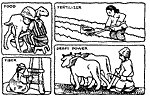 Environmentally Sound Small-scale Livestock Projects by Linda Jacobs, VITA (Volunteers in Technical Assistance), 1986 -- An environmentally sound livestock project uses local resources wisely, works with livestock that are appropriate to the environment, and recycles nutrients back to the soil. Such a project actually may enhance the environment by encouraging beneficial changes that contribute to environmental health. The overall goal is a sustainable agricultural system. Key concepts are maintenance of environmental balance through recycling, regeneration and knowledge of interactions in natural systems, active involvement of local people at all levels, preference for traditional agricultural techniques that have a sound ecological basis, and integration of livestock, cropping, and other land-use systems. Useful how-to manual. 149pp (CODEL/Heifer/VITA/Winrock). Full text free online at CD3WD 3rd World Development online library:
http://www.cd3wd.com/cd3wd_40/vita/envlstpr/en/envlstpr.htm
 Animal Husbandry: Feeding and Care of Animals, Better Farming Series 08 (FAO) -- Feeds and feeding, pasture, silage, hay, looking after animals, housing. Full text free online at CD3WD 3rd World Development online library:
http://www.cd3wd.com/cd3wd_40/lstock/001/lsgen/
animal_husbandry/fb08ae/b73.htm
 Animal Husbandry: Animal Diseases; How Animals Reproduce, Better Farming Series 09 (FAO) -- Covers injuries, parasites, diseases, vaccination, looking after ill animals, reproduction, how animals reproduce, pregnancy and birth, choosing breeding animals, castration, and more. Full text free online at CD3WD 3rd World Development online library:
http://www.cd3wd.com/cd3wd_40/cd3wd/vet/
fb09ae/en/b74.htm
 Using Fodder from Trees and Shrubs to Feed Livestock in the Tropics, Better Farming Series 42 (FAO) -- Animals fed tree fodder with grasses will be healthy, and grow faster than if fed only on grasses. In dry tropical areas animals can be fed almost entirely on fodder trees. Covers common fodder trees and shrubs, feeding fodder from treks and shrubs, growing fodder trees and shrubs, practical tips. Full text free online at CD3WD 3rd World Development online library:
http://www.cd3wd.com/cd3wd_40/lstock/001/lsfeed/fb42ue/index.htm
 Feeding Animals on Straw, Better Farming Series 43 (FAO) -- Detailed, practical guidelines for two different methods of using straw and stalk residues from rice and other cereals as livestock feed. Illustrated. Full text free online at CD3WD 3rd World Development online library:
http://www.cd3wd.com/cd3wd_40/cd3wd/
agric/fb43fe/en/b106.htm
Animals in Agroforestry, The Overstory #35 -- Agroforestry systems that incorporate animals with tree crops can enhance important cycles of nature such as nutrient cycling and balancing of insect populations while reducing energy intensive management techniques. The key is to integrate the natural needs, behaviors, and products of animals with the environment provided by the agroforestry system in a way that maximizes the benefits to the animals and to the system as a whole.
http://www.agroforestry.net/overstory/overstory35.html
Silvopasture: An Agroforestry Practice, The Overstory #36 -- Silvopasture is designed and managed for the production of trees, tree products, forage and livestock. As a silvopasture, timber and pasture are managed as an integrated system.
http://www.agroforestry.net/overstory/overstory36.html
Trees/Livestock Examples, The Overstory #37 -- Productivity of Animals in Agroforestry Systems, summarizes examples of several important agroforestry systems which incorporate animals.
http://www.agroforestry.net/overstory/overstory37.html
 Basic Butchering of Livestock and Game by John J. Mettler, Jr., DVM, 1986
This is the book for anyone who hunts, farms, or buys large quantities of meat. Takes the mystery out of slaughtering and butchering everything from beef and veal, to venison, pork, lamb, poultry, rabbits and small game. Also processing and preserving. Clear and easy-to-follow, with 130 detailed illustrations, complete, step-by-step instructions. Buy at Amazon.com: Basic Butchering of Livestock and Game
 Fences for Pasture and Garden, Gail Damerow, 1992, Storey Books, ISBN 088266753x
A good fence is essential for protecting your livestock. "'Build all your fences horse high, pig tight, and bull strong,' the old saying goes," writes Gail Damerow, the editor of Rural Heritage magazine. But "no-one else's fencing needs are exactly like yours." A well-made fence brings peace of mind. Practical, easy-to-use guide to selecting, planning, and building fences that work. Pros and cons of various fence systems, complete and well-illustrated directions on how to build all types of fences, and also gates. The focus is on fencing livestock in and predators out, not a book for "pretty" suburban fences. Buy at Amazon.com: Fences for Pasture and Garden
 A Guide to Stock Fencing by Andy Radford, Crowood Press, UK, 144 pages -- Practical fence-building manual for every situation, from protecting and confining large animals like cattle and horses to enclosing a few chickens. Guidance on buying the right tools and materials, constructing fences for different livestock, fencing along slopes, crossing streams and rivers, adding stiles and gates and techniques for securing posts in soft or shallow ground. Buy at Amazon.com: A Guide to Stock Fencing
 Farm and Smallholder Fencing: a Practical Guide to Permanent and Electric Livestock Fencing on the Farm and Smallholding by Michael Roberts, Gold Cockerel Books, UK, 128 pages -- Thorough, compact book on fencing -- tools, gates, rails, supports and types of material including wire, netting, wood, high tensile wire and electric wire. Fencing problem areas (uneven ground, ditches), making tree guards and stiles. Fencing for specific animals, including poultry and waterfowl, rabbits, pigs, sheep, goats and horses. Fully illustrated. Buy at Amazon.com: Farm and Smallholder Fencing
Draft animals
 Farming with Horses by Steve Bowers, Motorbooks International, 2006, ISBN 0760323135
Bowers is a trainer of working horses, and shows how to make the old ways work like new. Explains how to select a work horse, different types of harness and collar, how to hitch a horse to an implement, alignment, rein grips, and every other aspect of farming with horses. Color illustrations. 212 pages. Buy at Amazon.com: Farming with Horses
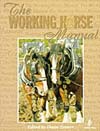 The Working Horse Manual by Diana Zeuner (edt), Farming Press, 1998, ISBN 0852364016
A compilation of commissioned articles by authorities on the modern draught horse scene: breeds, choosing and keeping working horses, veterinary and farriery care, training both for drivers and horses and much about the work these horses do. A great book for anyone interested in working horses. Buy at Amazon.com: The Working Horse Manual
Draft Horse Journal Online -- "the world's foremost heavy horse & mule publication", quarterly journal, since 1964.
http://www.drafthorsejournal.com/
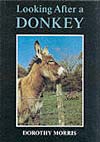 Looking After a Donkey by Dorothy Morris, 1997, Whittet Books, UK, ISBN 0905483669, 154 pages -- A clear guide to the care and management of donkeys by an experienced owner and breeder. Covers all aspects of donkey care and management including feeding, housing, breeding, showing and health. Suitable for anyone keeping a donkey.
Illustrated throughout with useful drawings and photographs. Buy at Amazon.com: Looking After a Donkey
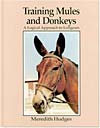 Training Mules and Donkeys: A Logical Approach to Longears by Meredith Hodges, 1993, Alpine Publications, ISBN 0931866588, 329 pages -- Mules are not horses, and training methods used with horses are often not effective with mules. Meredith Hodges is a well-known trainer and writer on donkey and mule behavior. This is a "no-resistance" training manual covering simple psychology and training techniques to help the trainer toward a more enjoyable and rewarding experience with their longears. More about mules than about donkeys. Buy at Amazon.com: Training Mules and Donkeys
 Farming with Animal Power -- Better Farming Series 14 (FAO - INADES, 1977, 57 pp) -- Covers oxen, donkeys, horses, mules, camels, training, feeding, care and upkeep, choosing and preparing fields, tools for use with animal power, economics, examples. Full text free online at CD3WD 3rd World Development online library:
http://www.cd3wd.com/cd3wd_40/lstock/001/
dap/bfanimalpower/index.htm
 Permanent Farming Systems Based on Animal Traction: Farmers Handbook (GTZ, 1995, 183 pp) -- Draft cattle, donkeys, draft animal implements, the soil, the permanent farming system (covering soil conservation and improvement, ridging), crops (cereals, root & tuber crops, leguminous crops, permanent crops) vegetable gardening, farm management. Full text free online at CD3WD 3rd World Development online library:
http://www.cd3wd.com/cd3wd_40/lstock/
001/dap/antractionhandbook/index.htm
 Donkeys for Development, Peta Jones, Donkey Power, South Africa, 158pp, 2005 -- What it means to have donkeys, choosing a good donkey, the life cycle of donkeys, keeping donkeys, veterinary considerations, equipment suitable for donkeys, training donkeys, economic calculations, patterns for some equipment, hitching for carts, glossary, further reading. Full text free online at CD3WD 3rd World Development online library:
http://www.cd3wd.com/cd3wd_40/lstock/001/
equines/donkeys_development/index.htm
 Harnessing and Implements for Animal Traction: An Animal Traction Resource Book for Africa, by Paul Starkey, GTZ, 1989, ISBN 3-528-02053-9 -- Harnessing options for oxen, horses, donkeys, camels and buffaloes, wide spectrum of tillage implements, seeders, animal-drawn carts and other draft animal technologies. Definitions and terminology, recent developments, technological choices, design options and assessments of practical advantages and disadvantages in actual farming systems. 245 pages, 128 plates, 255 line drawings, 333 references. Full text free online at CD3WD 3rd World Development online library:
http://www.cd3wd.com/cd3wd_40/lstock/001/dap/hness-impls.pdf
Donkeys for traction and tillage -- Agrodok No. 35, Agromisa Foundation, ISBN 90-77073-95-7 -- Characteristics and use, care, usage as pack animal, training, harnessing, hitching, equipment for transport, equipment for primary tillage, equipment for crop husbandry, maintenance of farming equipment, further reading. In English, French, Portuguese -- Download here
 The Design and Manufacture of Animal-Drawn Carts by Ian Barwell and Gordon Hathway of I.T. Transport Ltd (UK), 1986, Practical Action
Covers different types of carts and how to build them. Photographs and line drawings. Two-wheeled carts, four-wheeled carts, tippers, bottom-dumpers, water-carriers, bodies, axles, wheels, suspension, horses, oxen, camels, harnessing and hitching, lots of detail. Most people in developing countries don't have transport. Often they don't even have roads. But the planners ignore every option that doesn't have a motor. So people usually use their legs to travel, and transport goods on their backs. There are many local alternatives, but they get no support and are few and far between. This book is the first of a series by the ILO and UNCHS/HABITAT on low-cost vehicles. A few countries still have traditional cart-making skills, but most don't. Animal carts are cheap and efficient, they don't need much of a road, they're easy to build, and they're sustainable. Buy at the Development Bookshop: The Design and Manufacture of Animal-Drawn Carts
Small farms
Small farm resources
Community-supported farms
Farming with trees
Farming with animals
Pasture
Pigs for small farms
Poultry for small farms
Aquaculture for small farms
Composting for small farms
Controlling weeds and pests
Small farms library
City farms
Organic gardening
Building a square foot garden
Plant spacing guides
No ground? Use containers
When to sow what
Seeds
Garden pond
Gardening resources
Composting
Making compost
Composting resources
Composting indoors
Vermicomposting
Humanure
Composting for small farms
