

Search the Journey to Forever website – click HERE
|
Journey to Forever: Make a donation |

Navigation
Contact usTo Keith Addison Handmade Projects |
New! The Biodiesel Bible – everything about homebrewing – Click HERE
New! Make your own ethanol fuel
Build a 3-inch ethanol still
Journey to Forever's 3-inch ethanol still makes up to 5 gallons (19 litres) per hour of high-proof alcohol fuel, ready to use. Your car will run faster, cooler, and better on ethanol – and you'll save money on fuel.
Anyone with basic backyard DIY skills can build the still. A new, large-size blueprint shows the sections of the still in full-sized detail, and the 41-page e-book manual tells you everything you need to know to build the still and operate it. It's a complete package.
Click HERE
Ethanol resources on the Web
David Blume's book "Alcohol Can Be A Gas!" has thorough and detailed information on using alcohol fuel and converting engines to run on ethanol -- including information on running ordinary, unconverted engines on E-85. Recommended. Order online at Amazon.com: Alcohol Can Be a Gas! In the US, E85 fuel is comprised of 85% ethanol by volume and just 15% petroleum. Though it hasn't received nearly as much publicity as it should have, many cars sold in the US are "Flexible Fuel Vehicles" (FFVs) that can run on E85 or gasoline when E85 is unavailable. More than 750,000 FFVs made their way to US showrooms in 2000. Ford, Daimler Chrysler, General Motors, Isuzu, Mazda, Mercury all make FFVs. The following websites have details of which models are FFVs. The Biofuel mailing list run by Journey to Forever is an information-sharing resource for anyone who is making their own fuel or has an interest in biofuels or related issues. Ethanol in Brazil, from the International Liquid Biofuels Congress held in Brazil in July 1998 (Acrobat file) Distillation - How it works, by Mike Nixon -- all is explained, clear and simple guide. (Acrobat File) Particularly in the US, the prospect of producing ethanol from cellulose has been attracting much attention in the increasingly desperate search for "alternatives" to the current use (overuse) of fossil-fuels. (See "How much fuel can we grow? How much land will it take?") An expert's view: "Re. lignocellulosic ethanol, I am, bluntly, a skeptic. This is R&D, not something ready for commercial ventures... Using available corn stover and enzymatic hydrolysis, the currently favored biomass resource and process, our techno-economic analysis estimated a cost of ethanol twice as high as that of ethanol from corn. Forest residues and wastes, biomass crops, and municipal wastes are even less promising. The conclusions of this assessment are that none of the existing processes are ready for commercial applications in any foreseeable time frame and that continuing fundamental and applied R&D is required." -- Dr. John Benemann on Cellulosic Ethanol: Making ethyl-esters biodiesel using ethanol is a tricky process, not as simple as making methyl esters with methanol. But it can be done -- the following technical papers are available online in our Biofuels Library, and there's sound advice below from a master home-brewer who routinely makes his own ethyl-esters biodiesel. 1. Get plenty of experience making biodiesel with methanol before you try it with ethanol. Get comfortable titrating your oil for FFAs (free fatty acids); you’ll need to do that when you use ethanol. To make ethyl esters the ethanol must be anhydrous, 99%+ pure -- with less than 1% water content. The purest ethanol that can be produced by ordinary distillation is only 95.6% pure, the rest being water, which interferes with the transesterification reaction in making ethyl esters. More common for home distillation is 170-190 proof -- 85-95% pure. Home Distillation of Alcohol (Homemade Alcohol)
Some of the resources here have more to do with drinking than driving, but the homebrew hooch specialists make good ethanol of high purity, though generally in smaller quantities, and some of the most knowledgeable people on the subject and best resources on distilling are found among the homebrewers.
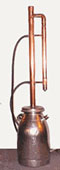
The StillMaker: designed for booze, but it makes 190-proof alcohol.
Proof and percent: The "proof" measure is double the percentage volume of pure alcohol. Thus 100-proof spirit contains 50% alcohol by volume, 200-proof is 100% pure.
How-to books
Ethanol and your car
Forums
General information
Small-scale ethanol
Ethanol from cellulose
Ethanol biodiesel
Hooch
How-to books
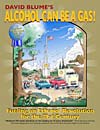 "Alcohol Can Be a Gas! -- Fueling an Ethanol Revolution for the 21st Century" by David Blume, International Institute for Ecological Agriculture, California, 2007, 594p. -- David Blume's book is the new bible of small and medium-scale ethanol fuel production, the product of Blume's 30 years of hands-on experience with ethanol production plus four years of full-time research on all aspects of the subject. Six books in one, it covers the history, busts the myths and points the way to the future, with detailed, well-illustrated nuts-and-bolts information on making alcohol, handling the co-products, converting engines and using the fuel, plus ethanol as a business. Blume is an organic farmer and permaculturist and focuses on sustainable biofuels production. Essential reading for anyone interested in biofuels, ethanol and other. Recommended. Order online at Amazon.com: Alcohol Can Be a Gas! Read Journey to Forever's review here.
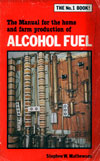 Alcohol Fuel Manual: "The Manual for the Home and Farm Production of Alcohol Fuel" by S.W. Mathewson, 1980, Ten Speed Press, out of print -- this excellent manual gives you all the information you need to get going with making your own alcohol fuel. Aimed at small-scale production, good chapters on fuel theory, everything about feedstocks, processing, fermentation, yeast, using ethanol, distillation. Free online at the Journey to Forever Biofuels Library.
Mother Earth Alcohol Fuel -- a guide to the fine points of home alcohol production, Mother's Alcohol Fuel Seminar, The Mother Earth News, 1980, out of print --  in 1978 The Mother Earth News research team started studying methods and distillation processes, testing mash formulas, designing apparatus, compiling information, converting engines and running seminars, spending upwards of US$300,000 on the project. This manual is one of the results. Free online at the Journey to Forever Biofuels Library.
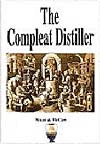 "The Compleat Distiller" by Mike Nixon and Mike McCaw, The Amphora Society, 2001
It may sound like an over-ambitious title, but it's just an accurate description. It covers everything, it's clearly written, well-organised, a pleasure to read. The guys on the Distillers mailing list love it: "One great distilling book! I haven't ever read a distilling book as complete as this. Everything is covered." Another: "If you ever have thought about buying just one book on distillation, this should be that book. If you are a beginner, this book is perfect. If you have been taught the art by your old pappy livin' in those there hills, this book is for you. If you are a master crafter and know everything, this book is for you." Order online, as a PDF (Acrobat file) or a printed book:
http://www.amphora-society.com
Building a Home Distillation Apparatus -- A Step by Step Guide, by Bob Lennon. Detailed online guide, focus on building and operating the StillMaker still: "does not enter into the domains of fermentation, recipes for making mash, beer, wine or any other spirits". Many homebrewers have built this still. Lennon says it "easily produces 95% ethanol in a single pass". Designed with the aid of computer programs which modeled continuously operating fractionating columns and the results were then adjusted to accommodate a batch processing operation. Now with two versions -- as well as the internal reflux model, Bob's added a new design for a reflux column with a top mounted condensor, using a beer keg as the boiler (the valved reflux model). Online and in Acrobat format, free.
http://www.Moonshine-Still.com
Simple Sour Mash to Simple Alcohol Fuel -- From US still maker Revenoor, the book "reflects 60 years of alcohol production and research", with 208 pages on Sour Mash and other Mash-making prcedures, fermentation, auto conversion, recipes, latest Tax Credits and Incentive and more.
http://www.revenoor.com/merchant.ihtml?pid=13&step=4
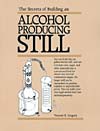 Secrets of Building an Alcohol Producing Still, by Vince Gingery, 82 pages, 1994. "Be independent. Thumb your nose at the corner gas station. Build a still, and make fuel." How to take common plumbing parts, copper sheeting, and standard electrical parts and build a 6 gallon capacity still. Buy at Amazon.com: Secrets of Building an Alcohol Producing Still
 Makin' It on the Farm -- Alcohol Fuel is the Road to Independence, by Micki Nellis, 88 pages, 1979. "This book is still in demand after 18 years. Referenced in many alternative energy guides, how-to books, and in the ATF's own guide to fuel alcohol. Was used as a textbook in several community colleges." Buffalo Creek Press:
http://buffalo-creek-press.com/alcohol.htm
 Alcohol Motor Fuel Cookbook, by Mike Brown, 141 pages, 1979 -- How to ferment grain into alcohol and modify carburetors to run on it. One of the originals, new edition. Buy at Amazon.com: Alcohol Motor Fuel Cookbook
 How To Build A Junkyard Still, by Mike Brown, 45 pages, 1980 -- be your own motor fuel magnate. This book shows how to build a complete fractionating column/distillery out of a garbage can, a pipe full of rocks, the back of a toilet, and some plumbing pipe. This is the companion book to Brown's Alcohol Motor Fuel Cookbook. Buy at Amazon.com: How To Build A Junkyard Still
 Alcohol Distiller's Handbook, by Herman Willkie, Joseph Prochaska, 195 pages, 1980 -- covers milling, mashing, fermentation, distillation, distillers' dried grain and solubles and laboratory control. For personal fuel self-sufficiency or commercial production. Buy at Amazon.com: Alcohol Distiller's Handbook
Ethanol and your car
How To Adapt Your Automobile Engine For Ethyl Alcohol Use -- Mother Earth Alcohol Fuel Manual. Full-text online at the Biofuels Library
Convert Your Car to Alcohol, by Keat B. Drane, 1980 -- Detailed instructions on how to run a gasoline car on clean, renewable ethanol fuel. Covers everything you need, from the fuel line to the carburetor to the ignition system, with tips on cold-weather starting. Full-text online at the Biofuels Library.
How to modify an injection system: It's Toyota-specific, but applies to most electronic fuel injection systems.
http://www.geocities.com/MotorCity/Pit/9975/
dataBySubject/EFImods.htmlFlexible Fuel Vehicles and E85
Alternative Fuels Data Center, US Dept of Energy
http://www.eere.energy.gov/afdc/afv/eth_vehicles.html
E85 summer blend is 85% ethanol 15% gasoline; E85 winter blend is 70% ethanol 30% gasoline.Forums
All aspects of biofuels and their use are covered -- biodiesel, ethanol, other alternative fuels, related technologies and issues, energy issues, environment, sustainability and more. Subscribe here.
Search the combined Biofuel and Biofuels-biz list archives -- 70,000+ entries from discussions by biofuellers all over the world over the last eight years, a treasure trove of information on all aspects of biofuels and sustainability:
http://www.mail-archive.com/biofuel@sustainablelists.org/
Distillers mailing list -- On distilling for the bottle rather than the fuel tank. "Dedicated to the exchange of information and experiences relating to the process of producing alcohol at home. Especially suited to spirit distillation."
Subscribe: distillers-subscribe@yahoogroups.com
List URL: http://groups.yahoo.com/group/distillers
FAQ and other information: http://homedistiller.org
New_distillers mailing list -- for newcomers.
Subscribe: new_distillers-subscribe@yahoogroups.com
List URL: http://groups.yahoo.com/group/new_distillers
FAQ and other information: http://homedistiller.orgGeneral information
http://www.biodiesel.org/resources/reportsdatabase/
reports/gen/19980722_gen-249.pdf
"Making Ethanol from Sugar Cane in Brazil" by Isaias de Carvalho Macedo, from "Energy As An Instrument for Socio-Economic Development", UNDP, 1995 -- Case study of the "large-scale" production of fuel ethanol from sugar cane in Brazil from the perspective of job creation. Ethanol production has provided nearly 700,000 jobs in Brazil, 75% of them direct jobs. The so-called "large scale" biomass conversion to energy is in fact a large collection of small-scale systems; in the Brazilian case, this corresponds to the scale of agriculture generally... The ethanol programme has been an important factor in creating job opportunities, in both more and less developed regions of Brazil. In some regions, it has been remarkable at evolving from lower to higher-quality jobs, reducing seasonal unemployment, increasing wages and social benefits, and introducing new technologies in a timely way.
http://www.undp.org/seed/energy/policy/ch10.htm
Brazil's National Alcohol Program: The objective of the National Alcohol Program (PROALCOOL), established in 1975, was to use ethanol as a fuel substitute for gasoline and to increase ethanol production for industrial uses. By 1985, some US$6.5 billion had been invested in the production of 13 billion gallons (50 billion liters) of ethanol, some 500,000 jobs had been created, 2.5 million vehicles were running on pure ethanol, and all the gasoline at filling stations had an admixture of 20 percent ethanol. Brazil now has technology and equipment capable of maintaining a four billion gallon (16 billion liter) annual output and of exporting the related technology, equipment, and services. By dramatically reducing the level of carbor monoxide released by motor vehicles, PROALCOOL is contributing to Brazil's efforts towards protecting the environment. See:
Addition of Oxygenated Compound to Gasoline and the PROALCOOL Experience, Economy & Energy No 19 - April/May 2000:
http://ecen.com/eee19/compoxie.htm
Brazil Proposes Sugar Export Tax To Regulate Ethanol Production, May 30, 2002
http://www.bbiethanol.com/news/view.cgi?article=523
Dual Fuel Cars Revive Brazil's Alcohol Industry, by Mario Osava, Aug 25, 2003
http://tierramerica.net/english/2003/0825/iacentos.shtml
Brazil seeks to woo back ethanol car drivers, Reuters, September 19, 2002
http://www.planetark.com/dailynewsstory.cfm/newsid/17823/story.htm
Institute for Local Self-Reliance -- The Institute for Local Self-Reliance (ILSR) works with both the public and private sectors in the US on economic development through the efficient use of local resources.
http://www.ilsr.org/
Carbohydrate Economy Clearinghouse (CEC) -- Created by the Institute for Local Self-Reliance (ILSR) to provide up-to-date information spanning all facets of the carbohydrate economy, "from paints and inks to fuels and construction materials".
http://www.carbohydrateeconomy.org/
Search huge resources of news, information, reports and studies on ethanol and other biofuels:
http://www.carbohydrateeconomy.org/Search2/search.cfm
World Fuel Ethanol Analysis and Outlook, by Dr. Christoph Berg, April 2004 -- France, Brazil, USA, Canada, EU, India, Thailand, China, Australia, Peru and other Latin America.
http://www.distill.com/World-Fuel-Ethanol-A&O-2004.html
Small-Scale Ethanol Production -- United States Department of Agriculture National Agricultural Library Quick Bibliography Series, 135 references, published 1992.
http://www.nal.usda.gov/afsic/AFSIC_pubs/qb92-46.htm
Properties of Alcohol Transportation Fuels. Prepared for: Biofuels Systems Division, Office of Alternative Fuels, U.S. Department of Energy, July 1991 -- "During the mid and late 1980s, research on alcohol fuels undertaken in the United States, Japan, and Europe expanded greatly. This research has covered the entire alcohol production, distribution and utilization process. The results of this research have not been broadly disseminated to the public policy community . No other compilation of recent findings is currently available. This report presents a range of scientific and engineering information on the characteristics of alcohol fuels." Table of Contents, chapter downloads:
http://www.hawaii.gov/dbedt/ert/new-fuel/files/afrw.html
Complete report -- Acrobat file, 34Mb:
http://www.hawaii.gov/dbedt/ert/new-fuel/files/afrw/afrw-all.pdf
A complete report covering all of the applications of ethanol in gasoline, in new and used engines: ERDC Project No 2511 "Intensive Field Trial of Ethanol/Petrol Blend in Vehicles". This trial showed no harm to any engines, and documented the benefits. This is the Executive Summary, compliments of Apace Research Ltd -- 10 pages, 32kb Acrobat file.
Renewable Fuels Association -- The US national trade association for the domestic ethanol industry. Links, news, technical reports, general information.
http://www.ethanolrfa.org
American Coalition For Ethanol (ACE) -- ACE is "the grassroots voice of the U.S. ethanol industry", a non-profit membership association devoted to promoting the increased production and use of ethanol. Industrial-scale, based on corn monocrops.
http://www.ethanol.org
The National Renewable Energy Laboratory (NREL) is the U.S. Department of Energy's premier laboratory for renewable energy and energy efficiency research, development and deployment.
http://www.nrel.gov/
The Alternative Fuels Data Center site has more than 3,000 documents in its database, an interactive fuel station mapping system, listings of available alternative fuel vehicles, links to related Web sites, and much more.
http://www.eere.energy.gov/afdc/index.html
Comparison of Transport Fuels -- Final Report (EV45A/2/F3C) to the Australian Greenhouse Office on the Stage 2 study of Life-cycle Emissions Analysis of Alternative Fuels for Heavy Vehicles, by Tom Beer, Tim Grant, Geoff Morgan, Jack Lapszewicz, Peter Anyon, Jim Edwards, Peter Nelson, Harry Watson & David Williams -- CSIRO in association with The University of Melbourne, the Centre for Design at RMIT. Parsons Australia Pty Ltd and Southern Cross Institute of Health Research.
http://www.greenhouse.gov.au/transport/comparison/index.html
Part 1 provides a summary of the salient points of each fuel, Part 2 consists of detailed chapters on each fuel.
Executive Summary - (Acrobat file 186Kb)
http://www.greenhouse.gov.au/transport/comparison/pubs/execsummary.pdf
Part 1 Hydrated Ethanol - (Acrobat file 39Kb)
http://www.greenhouse.gov.au/transport/comparison/pubs/1ch6.pdf
Part 2 Hydrated Ethanol - (Acrobat file 282Kb)
http://www.greenhouse.gov.au/transport/comparison/pubs/2ch6.pdf
Part 1 Diesohol - (Acrobat file 35Kb)
http://www.greenhouse.gov.au/transport/comparison/pubs/1ch7.pdf
Part 2 Diesohol - (Acrobat file 146Kb)
http://www.greenhouse.gov.au/transport/comparison/pubs/2ch7.pdf
Part 1 Anhydrous Ethanol - (Acrobat file 32Kb)
http://www.greenhouse.gov.au/transport/comparison/pubs/1ch13.pdf
Part 2 Anhydrous Ethanol - (Acrobat file 69Kb)
http://www.greenhouse.gov.au/transport/comparison/pubs/2ch13.pdf
Part 1 Petrohol - (Acrobat file 36Kb)
http://www.greenhouse.gov.au/transport/comparison/pubs/1ch14.pdf
Part 2 Petrohol - (Acrobat file 96Kb)
http://www.greenhouse.gov.au/transport/comparison/pubs/2ch14.pdf
Grades of ethanol -- what they are, what they mean, from Pharmco Products
http://www.pharmco-prod.com/pages/alcoholintro.html Small-scale ethanol
See The Compleat Distiller by Mike Nixon and Mike McCaw
Preparation of ethanol from molasses -- This method uses fresh rubber coagulum as binder and live cell immobilising agent. Once prepared the yeast culture can be used repeatedly for months under non-sterile conditions for fermenting sugars to ethanol prior to distillation, with high yields. Full details and diagram. From Manick Harris, Malaysia, Biofuel mailing list, 26 Aug 2005
Revenoor -- Alcohol Stills: Revenoor has been in the alcohol producing industry for the past three generations. "If you thought Stills were for making 'Moonshine' you'd be mostly right. The production of alcohol fuels is basically the same as producing 'Moonshine'. Our stills are used to produce alcohol fuel, the clean, environmentally friendly alternative to gasoline."
http://www.revenoor.com/
The Ethanol Source -- US source for enzymes, zeolite, turbo yeast etc for small-scale ethanol production, also how-to's, resources.
http://theethanolsource.com/
"Understanding Ethanol Fuel Production and Use", by Cliff Bradley & Ken Runnion, Technical Paper # 3, Understanding Technology Series, Volunteers In Technical Assistance (VITA) -- 7,000-word article on small-scale ethanol production, with bibliography. Volunteer co-authors Bradley and Runnion specialize in alcohol fuel production technologies at Renewable Technologies, Inc. Free online at CD3WD 3rd World Library:
http://www.cd3wd.com/cd3wd_40/vita/ethanol/en/ethanol.htm
Ethanol Curriculum for Teachers (Grades 9-12)
http://www.nwicc.com/pages/continuing/business/ethanolcurriculum.html
"Ethanol -- As A Fuel", comprehensive study project from the Northwest Iowa Community College, including laboratory production of ethanol.
Small-Scale Ethanol Production -- United States Department of Agriculture National Agricultural Library Quick Bibliography Series, 135 references, published 1992.
http://www.nal.usda.gov/afsic/AFSIC_pubs/qb92-46.htm
Permits
In the US, home brewers need to get a "small fuel producer" permit from the US Alcohol and Tobacco Tax and Trade Bureau (TTB).
http://www.ttb.gov/industrial/distillation_of_ethanol.shtml
See Ethanol yield tables
See Biofuels supplies and suppliersEthanol from cellulose
Here are some facts:
http://www.mail-archive.com/biofuel@sustainablelists.org/msg70195.html
Another expert: "People often tell me they want to start planting switchgrass. I tell them, 'Well, you can plant it, but you aren't going to be able to do anything with it yet.'" -- Ed Clausen, chemical engineer with the University of Arkansas.
http://deltafarmpress.com/biofuels/070308-bioenergy-push/
With all that in mind, read on:
"Wood-Ethanol Report: Technology Review", Environment Canada 1999 -- good overview of the problem and the current solutions on offer. Go to the Biofuels Library.
Fuel From Sawdust -- by Mike Brown (from Acres, USA, 19 June 1983): Conversion of cellulose, such as sawdust, cornstalks, newspaper and other substances, to alcohol -- "a fairly uncomplicated and straightforward process". This is the old way -- it works, but it's not efficient and not economical. Go to the Biofuels Library.
Production of Ethanol from Wood in Russia since 1943 -- A detailed description of the operating process of a wood-hybrolysis plant in Siberia.
http://www.distill.com/woodhydrolysis/
Arkenol Inc. says it is a pioneer in processing cellulose biomas into ethanol: agricultural wastes, straw, leaves, grass clippings, sawdust or old newspapers. The company uses proprietary concentrated acid hydrolysis technology.
http://www.arkenol.com
The Iogen Corporation of Canada claims to be "the leader in developing and manufacturing ethanol-from-cellulose". The Iogen process is an enzymatic hydrolysis process for converting lignocellulosics to ethanol using steam explosion pretreatment and Iogen's proprietary enzymes.
http://www.iogen.ca/
Q & A with Iogen's Jeff Passmore regarding cellulosic ethanol, April 2003
http://www.eesi.org/publications/Newsletters/
BCO/eco%2019.htm#iogen
BC International Corporation says it uses a genetically modified organism to produce ethanol from biomass wastes such as agricultural residues, municipal waste, and forest thinnings. Two-stage dilute acid hydrolysis process for the preparation of the sugar streams and two separate fermentations although both use the same organism.
http://www.bcintlcorp.com/
"Ethanol Production in Hawaii", a "pre-feasibility" study with a focus on ethanol from cellulose (1994). Includes comparison of the different processes: simultaneous saccharification and fermentation; concentrated acid hydrolysis, neutralization and fermentation; ammonia disruption, hydrolysis and fermentation; steam disruption, hydrolysis and fermentation; acid disruption and transgenic microorganism fermentation; concentrated acid hydrolysis, acid recycle and fermentation; and acidified acetone extraction, hydrolysis and fermentation. Useful list of references. Acrobat file, 504kb.
http://www.hawaii.gov/dbedt/info/energy/
transportation/ethanol/studies/ethanol94.pdf
And here's one that went wrong, and could have gone horribly wrong:
http://www.purefood.org/ge/klebsiella.cfmEthanol biodiesel
Optimization of a Batch Type Ethyl Ester Process -- a recipe for biodiesel from ethanol (which you can make yourself), instead of methanol (which is toxic, fossil-fuel derived, and you can't make it yourself).
Production and Testing of Ethyl and Methyl Esters, University of Idaho, Dec 1994.
Transesterification Process to Manufacture Ethyl Ester of Rape Oil by Roger A. Korus, Dwight S. Hoffman Narendra Barn, Charles L. Peterson, and David C. Drown, Department of Chemical Engineering, University of Idaho, Moscow, Idaho, USA (Acrobat file, 672Kb)
Making and Testing a Biodiesel Fuel Made From Ethanol and Waste French-Fry Oil by Charles L. Peterson, Daryl Reece, Brian Hammond, Joseph C. Thompson, Sidney Beck, University of Idaho, Idaho, USA (Acrobat file, 2.4Mb)
Biofuels mailing list member Ken Provost, who has much experience making ethyl esters, sent us the following tips&tricks sheet. Ethanol-based Biodiesel
2. Try to find a source of KOH (potassium hydroxide) to use instead of lye with ethanol. Lye (NaOH, sodium hydroxide) will work, but it dissolves VERY slowly in ethanol. You'll need to use more of either one -- 7g per liter of clean oil with NaOH, 10g per liter of clean oil with KOH. More as required per your titration level.
3. Your ethanol will have to be EXTREMELY dry. 199-proof or higher. "Absolute" ethanol. Any more than one half of one percent water can kill the reaction. Denaturants like methanol, isopropyl alcohol, MIBK, etc., are fine. But no water. Ethanol that dry is difficult to find cheap, especially in the US. If you want to try to make it yourself, you'll need molecular sieve, quicklime, or something else to do a "chemical" drying. Distillation alone can't get the water under 5% -- still way too much. (See below -- Anhydrous ethanol)
4. If you're interested in ethanol for environmental reasons, be careful. Even if you find anhydrous ethanol, it may come from fossil fuel. The denatured alcohols used by painters, or in other industrial applications, may be anhydrous but still derived from petroleum. In fact, since fermentation uses water, it's cheaper to make 200-proof starting with petroleum. The only way to know is to call the original manufacturer of the formula. Ask if the ethanol is "synthetic" or "fermentation". One type of denatured anhydrous ethanol that is almost always fermented is "fuel-grade", which is 199-proof denatured with gasoline. It's what they add to gasoline to make gasohol.
5. Your oil will also have to be EXTREMELY dry. Heat the oil to 120 deg C (248 deg F) and hold it there until you can turn off the flame and see the bubbling stop almost immediately. You might want to throw in some clumping cat litter (bentonite clay) and/or silica gel to scarf up any remaining water, let it settle half a day, and take the oil off the top. Sometimes that's still not dry enough. Remember -- any more than 0.5% water can kill the reaction.
6. Your oil will have to be fairly low in FFAs. You'll want to do a titration on every batch to make sure. Anything over 2 ml titration (using 0.1% NaOH solution) can cause failure of the glycerine to separate -- under 1 ml is a good idea. Most waste oil is too high, and either needs to be refined with NaOH first, or cut with clean oil to neutralize FFAs.
7. You need to use more ethanol to get full conversion. Somewhere between 275 and 300 ml per liter of oil is about right for most oils. Coconut oil will need more, maybe 350 ml. Theoretical is about 180 ml per liter, and the rest is excess to drive the reaction all the way.
8. Even when you do all the above, getting the glycerine to separate is a matter of good luck and fervent prayer. Sometimes separation occurs just like a methanol batch. Other times you won't start seeing a glycerine layer for 3 or 4 hours, or maybe overnight. Then again, sometimes it NEVER separates. Until you get separation, you haven't made biodiesel. I've heard of folks who don't wait for separation -- they just pour the whole mess right into the tank, or do some kind of water wash and think it's good biodiesel. It might burn, but it's not biodiesel. It must separate.
9. If it doesn't separate, you can sometimes force it by adding some methoxide mix. You can also make it more likely to separate by including some methanol with the ethanol right from the start. For example, you could try using an initial mix of 5 to 7 parts ethanol and 1 part methanol. Give it a few hours to separate. If it doesn't, add some straight methoxide to the kettle, using enough methanol to bring the alcohols ratio down to 3:1 eth:meth, and containing another 2g of KOH per liter of oil. That usually initiates separation within an hour. Fresh, refined edible oil might even work the first time with straight ethanol. If you use a mixture of ethanol and methanol, you can get away with 275 ml of initial mix per liter of oil.
10. If you're not scared off yet, Good Luck!
-- Ken ProvostAnhydrous ethanol
Members of Journey to Forever's Biofuels mailing list have succeeded in making ethyl esters using 85% ethanol they've distilled themselves, by removing the excess water with quicklime (CaO). See "The Manual for the Home and Farm Production of Alcohol Fuel" by S.W. Mathewson, Chapter 12 -- Drying the Alcohol, Drying with lime.
An easier method is to use 3A zeolite molecular sieve. Biofuels group member Ken Provost reports: "Zeolite (aka 'molecular sieve' ) works BEAUTIFULLY to suck the last bit of water out of distilled ethanol. I got a sample of Type 3A Molecular Sieve from Adcoa in Southern California:
http://www.thomasregister.com/olc/adcoa/molecula.htm
"I got a can of the 4-8 mesh -- little balls of rock about 1/8" diameter. They absorb about 20% of their weight of water over the course of a few hours. Take a liter of 95% ethanol, throw in 250g of the stuff, swirl occasionally, filter out the next day through a strainer, and presto! Anhydrous ethanol. Not expensive either -- US$2.05 a pound in 10 lb quantities, and reusable indefinitely. You drive off the water under a broiler for an hour."
An alternative is to run the ethanol vapours through 3A molecular sieve in a column during the distillation process.
Cornmeal Adsorber for Dehydrating Ethanol Vapors -- by Michael R. Ladisch et al., Laboratory of Renewable Resources Engineering, Purdue University. About half the ethanol now produced in the US is dried using corn grits. When the corn's drying capacity is worn out, it can be fermented and distilled to make more ethanol. This 1981 paper is the original work on the subject.
Separating Ethanol From Water -- by Renaldo V. Jenkins of Langley Research Center, Hampton, Virginia, USA. More economical methods of separating water from ethanol to produce anhydrous ethanol, using sulphur or castor oil. Provided by F. Marc de Piolenc.
Absolute Alcohol Using Glycerine -- Mariller-Granger Processes, from E. Boullanger: Distillerie Agricole et Industrielle (Paris: Ballire, 1924). Mariller's absolute alcohol production process by dehydration using glycerine, various systems examined and explained. Translation from the French by F. Marc de Piolenc.Hooch
http://www.homedistiller.org
Very informative and well-linked site by chemical engineer Tony Ackland, on distilling for the bottle rather than the fuel tank. Thorough treatment of the subject, great resources here, excellent site, recommended.
Distillation - How it works, by Mike Nixon -- all is explained, clear and simple guide. (Acrobat File)
See The Compleat Distiller by Mike Nixon and Mike McCaw
Culture Corner Archive: Makin' Moonshine
http://www.manalagi.com/jamesplace/indonesia/sopi/index.html
Appropriate technology in East Indonesia: making moonshine (sopi) from lontar palm juice (nirah), using a steel oil drum, a wooden lid sealed with sticky lontar fruit, plus bamboo and copper tubing, and a cooler made from a hollowed-out lontar palm trunk.
Still in orbit
http://theshredder.com/archive/mir1.html
"According to an intercepted communication, the Mission Control has demanded that the cosmonauts aboard the Mir Space Station get rid of the liquor-brewing still illegally installed aboard by one of the previous crews. It is the presence of the still, maintains a program official who would not be identified, that forced the recent shutdown of the main computer." Believe it or not.

Cosmonauts Tsibliyev, Lazutkin: "... traces of alcohol".
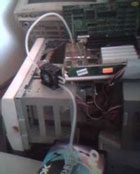 The x86 still
http://www.exaflop.org/docs/x86still/
"To put it simply, the key components [of a still] are a heating device and a cooling device. Now the average PC has both a heating device (the processor) and a cooling device (the fan). The question we asked was 'By separating the processor from its fan and adding a few small components, could we convince an ordinary PC to distill alcohol?'"
Yes it could!
"I had needed to reboot the machine twice in that time (due to over heating) and decided to call it a day after Linux failed to restart (at the third reboot attempt)."
Maybe that's how they do it on Mir...
Biofuels
En español -- Biocombustibles, biodiesel
Biofuels Library
Biofuels supplies and suppliers
Biodiesel
Make your own biodiesel
Mike Pelly's recipe
Two-stage biodiesel process
FOOLPROOF biodiesel process
Biodiesel processors
Biodiesel in Hong Kong
Nitrogen Oxide emissions
Glycerine
Biodiesel resources on the Web
Do diesels have a future?
Vegetable oil yields and characteristics
Washing
Biodiesel and your vehicle
Food or fuel?
Straight vegetable oil as diesel fuel
Ethanol
Ethanol resources on the Web
Is ethanol energy-efficient?
